Hardwood Floor Water Damage: Phoenix Repair Guide
· By Apache Junction Water Damage
Hardwood floors are an investment — and water is their worst enemy. Unlike tile, wood absorbs moisture, swells, and changes shape. The good news is that hardwood is also remarkably resilient: with fast, professional drying, many water-damaged wood floors can be saved. The bad news is that waiting, or drying improperly, turns salvageable floors into replacement jobs.
Here is how to read what water did to your wood and respond correctly.
How Water Damages Hardwood
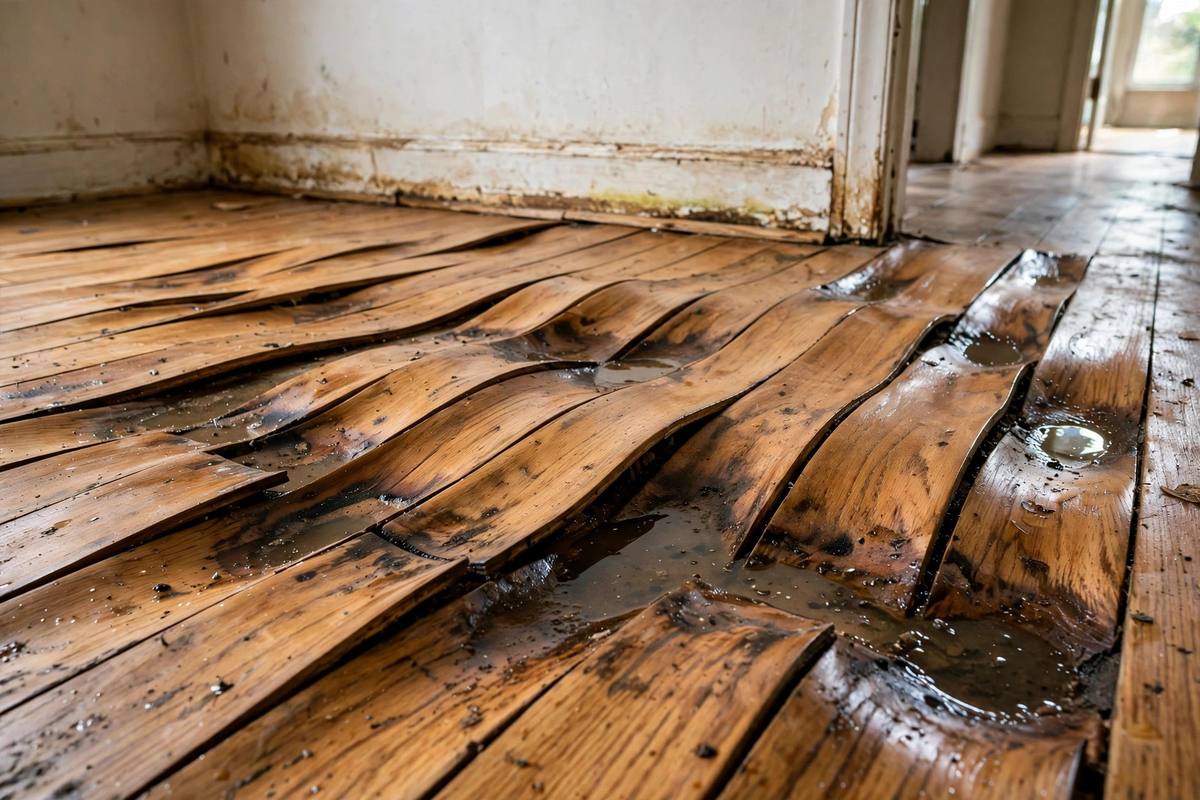
Cupping
The most common response: plank edges rise higher than the center, creating a washboard effect across the floor. Cupping happens when the bottom of the plank absorbs more moisture than the top — typical when water sits on the surface or wicks up from below. Cupped floors can often be saved with proper drying.
Crowning
The reverse — centers higher than edges — usually results from sanding a cupped floor before it fully dried, or from moisture imbalance after improper drying. Crowning is harder to fix and often means the floor was mishandled.
Buckling
The severe stage: planks detach from the subfloor and lift dramatically, sometimes inches. Buckling means major moisture and usually requires replacing the affected section at minimum.
Staining and finish damage
Water leaves dark stains as tannins and minerals migrate through the wood, and prolonged wetness breaks down polyurethane finishes, leaving white hazy spots or peeling.
What Can Be Saved
Cupped floors are the best candidates for rescue. Professional drying — using desiccant or LGR dehumidifiers, drying mats that pull moisture directly through the wood, and constant moisture monitoring — can return cupped planks close to flat over days to weeks. The critical rule: do not sand or refinish until the floor has reached its normal moisture content and stayed there. Sanding a still-wet cupped floor guarantees crowning later. Stains confined to the finish may sand out; stains that penetrated deep into the wood may remain visible even after successful drying, in which case refinishing with a darker stain can mask them.
When Replacement Makes More Sense
Buckled sections, mold growth on the underside of planks, damage from contaminated (gray or black) water, and floors that were already thin from previous sandings are replacement candidates. Also weigh the economics: if 60 percent of a room's floor is destroyed, refinishing the remainder to match new wood may cost nearly as much as a full replacement — and look worse. A reputable restoration provider gives you an honest assessment rather than pushing the most expensive option.
The Drying Process for Wood Floors
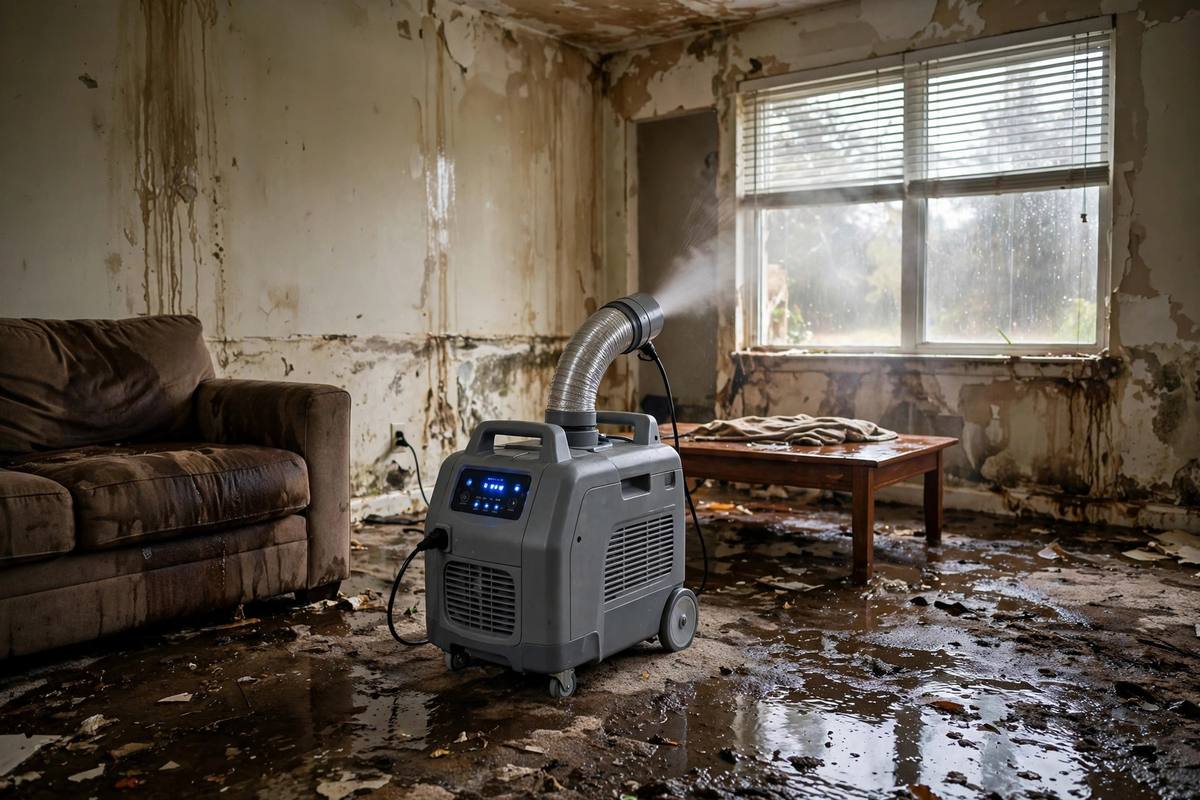
Professional wood floor drying starts with extracting all surface water, then placing specialized floor-drying mats connected to high-pressure air movers or desiccant systems that draw moisture up through the planks. Dehumidifiers control the room's humidity so evaporated moisture does not re-condense. Technicians take daily moisture readings of both the wood and the subfloor, and drying continues until both reach equilibrium with the home's normal conditions. Rushing this process — or skipping the subfloor readings — is how floors get ruined twice.
Our network's structural drying services include wood floor drying with proper monitoring, as part of complete water damage restoration that addresses subfloors and framing too.
More flooring recovery tips from our Apache Junction service area specialists.
Engineered Wood vs Solid Hardwood
Not all "hardwood" responds to water the same way. Solid hardwood — planks milled from single pieces of wood — is the most forgiving: it can cup dramatically and still return close to flat with proper drying, and it can be sanded and refinished multiple times over its life. Engineered wood, with its thin veneer over a plywood or fiberboard core, is less resilient. Once water penetrates to the core, the layers can delaminate — separate from each other — and no amount of drying rebonds them.
Laminate flooring, which merely imitates wood, fares worst: its fiberboard core swells irreversibly when wet, and replacement is the only option. Knowing which type you have matters before anyone promises a rescue. A professional assessment identifies the material and gives you an honest prognosis rather than a one-size-fits-all answer.
Wood floors wet? Do not sand, do not wait — call (408) 357-2008. We connect you with local providers for professional wood floor drying across the Phoenix metro.