Clean vs Gray vs Black Water: What AZ Homeowners Must Know
· By Apache Junction Water Damage
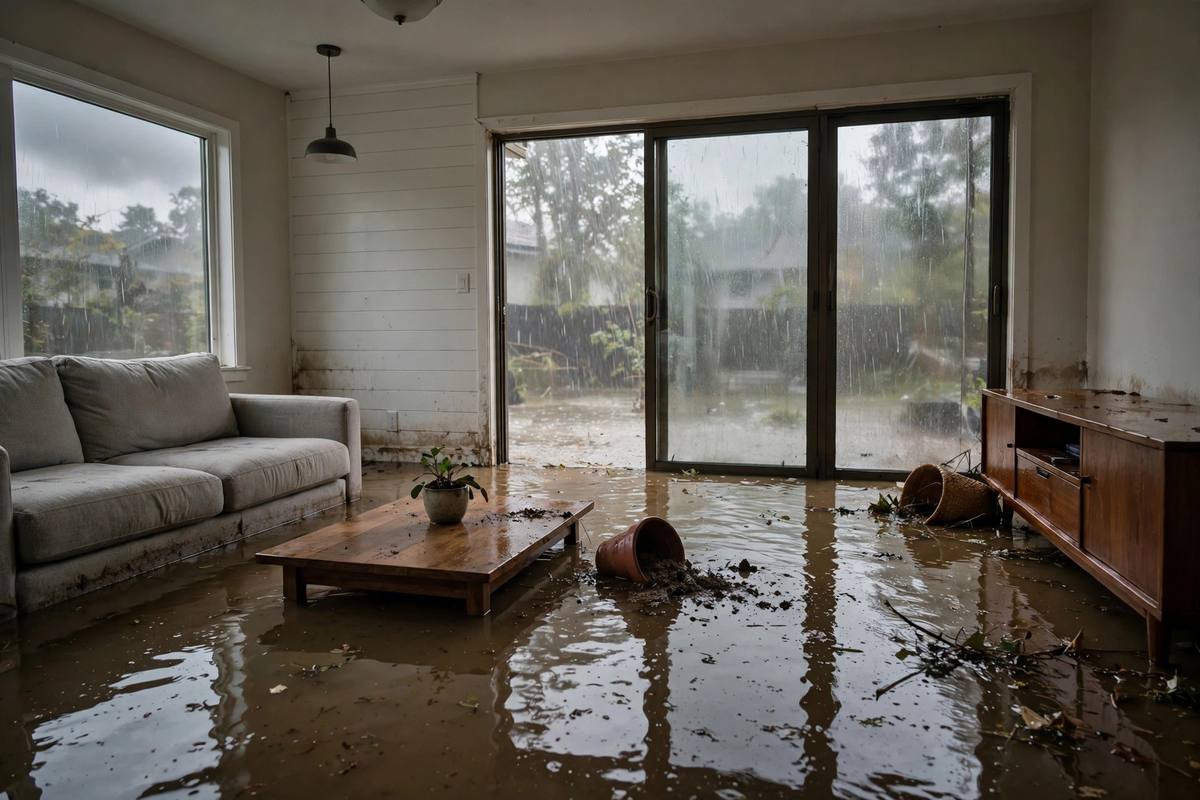
When restoration professionals talk about water damage, the first question is always: what kind of water? The industry classifies water intrusion into three categories, and the category drives every decision that follows — what protective gear is needed, what materials can be saved, what must be discarded, and how thoroughly the area must be disinfected.
Knowing the categories helps you respond safely and understand why professionals treat different floods so differently.
Category 1: Clean Water
Clean water comes from a sanitary source: a burst supply pipe, a failed water heater, rainwater intrusion, or an overflowing tub filled from the tap. It poses no immediate health risk beyond the damage itself. But "clean" has an expiration date — if Category 1 water sits for 24 to 48 hours, especially in our Arizona heat, bacteria multiply and it degrades to Category 2. That is why even a clean burst pipe demands fast extraction: time turns a simple dry-out into a contamination job.
Category 2: Gray Water
Gray water contains significant contamination and can cause illness with exposure. Sources include washing machine and dishwasher discharge, toilet overflows without solid waste, sump pump failures, and water from aquariums or waterbeds. It carries detergents, food particles, and microorganisms. Cleanup requires protective equipment, thorough disinfection of affected surfaces, and removal of porous materials like carpet pad that absorbed it. Gray water also degrades — left standing, it becomes Category 3.
Category 3: Black Water
Black water is grossly contaminated and dangerous. It includes sewage backup, toilet overflows with solid waste, rising floodwater from outside (monsoon runoff, overflowing washes), and any water that has contacted the ground and picked up soil, chemicals, and waste. Black water can carry bacteria, viruses, and parasites. Everything porous it touches — carpet, pad, drywall, insulation, upholstered furniture — must be removed and discarded, not dried and saved. Cleanup requires full protective gear, professional disinfection, and often controlled demolition of affected materials. This is never a DIY job.
Why the Category Matters for Your Home
What can be saved
Category 1 often allows saving carpet, drywall, and contents with proper drying. Categories 2 and especially 3 require discarding porous materials — no amount of drying makes sewage-soaked carpet safe.
How cleanup is done
Higher categories demand antimicrobial treatments, HEPA-filtered air scrubbing, and stricter containment to protect the rest of the home during work.
Insurance implications
The category affects the scope — and cost — of the claim. Professional documentation of the category supports proper coverage of the required work.
How to Respond to Each
For clean water: shut off the source, extract water fast, and dry aggressively — or call for emergency water extraction if the area is large. For gray water: protect yourself with gloves and boots, keep kids and pets away, and call professionals for anything beyond a tiny, contained spill. For black water: do not enter the water, do not try to clean it yourself, and call immediately — professional sewage backup cleanup teams have the equipment and protocols to make the space safe again.
Whatever the category, fast professional water damage restoration stops the clock on degradation. Learn more from our Apache Junction service area experts.
How Professionals Determine the Category On Site
When a restoration crew arrives, categorizing the water is one of their first tasks — and it is not always obvious. They start with the source: a supply line break is presumptively Category 1, a dishwasher discharge is Category 2, and anything from a drain backup or from outside is Category 3. Then they factor in time: clean water that has sat for more than about 48 hours gets upgraded, because bacterial growth has had time to change its nature.
They also consider what the water contacted on its way through your home. Clean supply-line water that flowed across a dirty garage floor or through wall cavities picks up contaminants and may be treated as Category 2. When there is genuine doubt, professionals err on the side of the higher category — the safety margin is worth more than the savings. This judgment is part of what you are paying for, and it is documented in the job file that supports your insurance claim.
Unsure what kind of water you are dealing with? Treat it as contaminated and call (408) 357-2008. We connect you with local providers equipped for every category across Apache Junction and Phoenix.